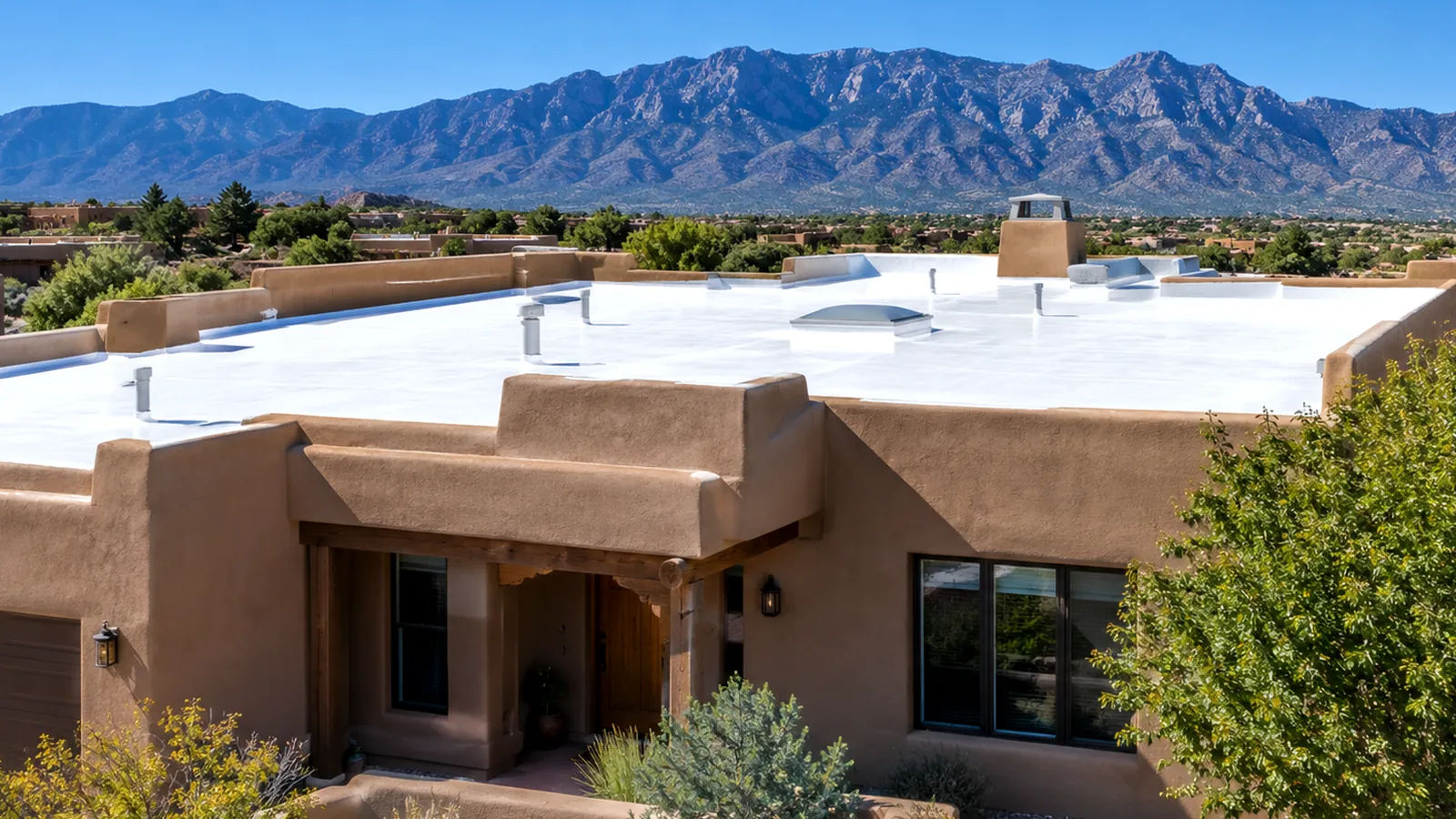
The low-slope problem
Shingles depend on gravity. On a roof with very little pitch, water and melting snow move slowly, and wind can push water up under the shingle laps. Ice dams form at the eaves. Low-slope roofs need a continuous, seamless surface instead.
Common low-slope roofs in town
- Built-up or rolled roofing on mid-century homes
- Modified bitumen on reroofed homes
- Porch, carport and addition roofs tied into the main house
- Older shingle roofs on shallow pitches that keep leaking
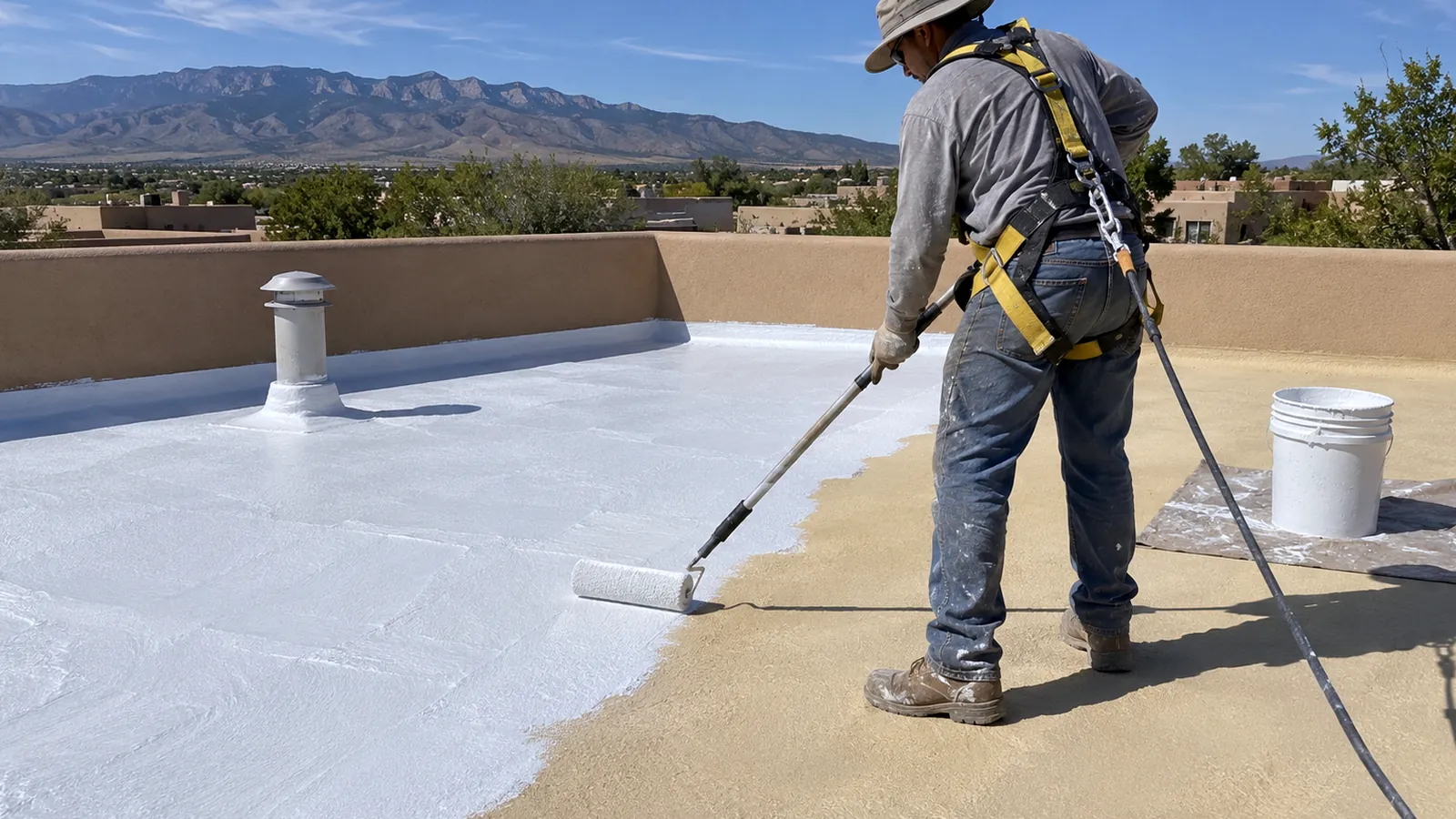
How a coating helps
A fluid-applied coating forms one continuous membrane over seams, laps and fasteners. With reinforcing fabric at seams and edges, it can stop the slow leaks that low-slope roofs are known for. It also adds UV protection and reflectivity.
When coating isn't enough
If the roof is soaked, the deck is soft, or shingles on a shallow pitch are failing everywhere, a new low-slope system like TPO is usually better. See flat roof replacement.
Snow and ice
Low-slope roofs hold snow longer. Sealing the eave edge and keeping scuppers and gutters clear makes a big difference. See ice dams on low-slope roofs.
Not sure what kind of roof you have? Call (505) 257-2289.
Common questions
Can you coat over shingles?
Coating over shingles on a low pitch is sometimes done, but it isn't right for most roofs. We'll tell you honestly what fits.
What's the minimum slope for shingles?
Manufacturers set minimums, and very shallow roofs often need special underlayment or a different roof type.
Is a coating cheaper than a new low-slope roof?
Usually much cheaper, if the existing roof is dry and sound enough.