What's up there
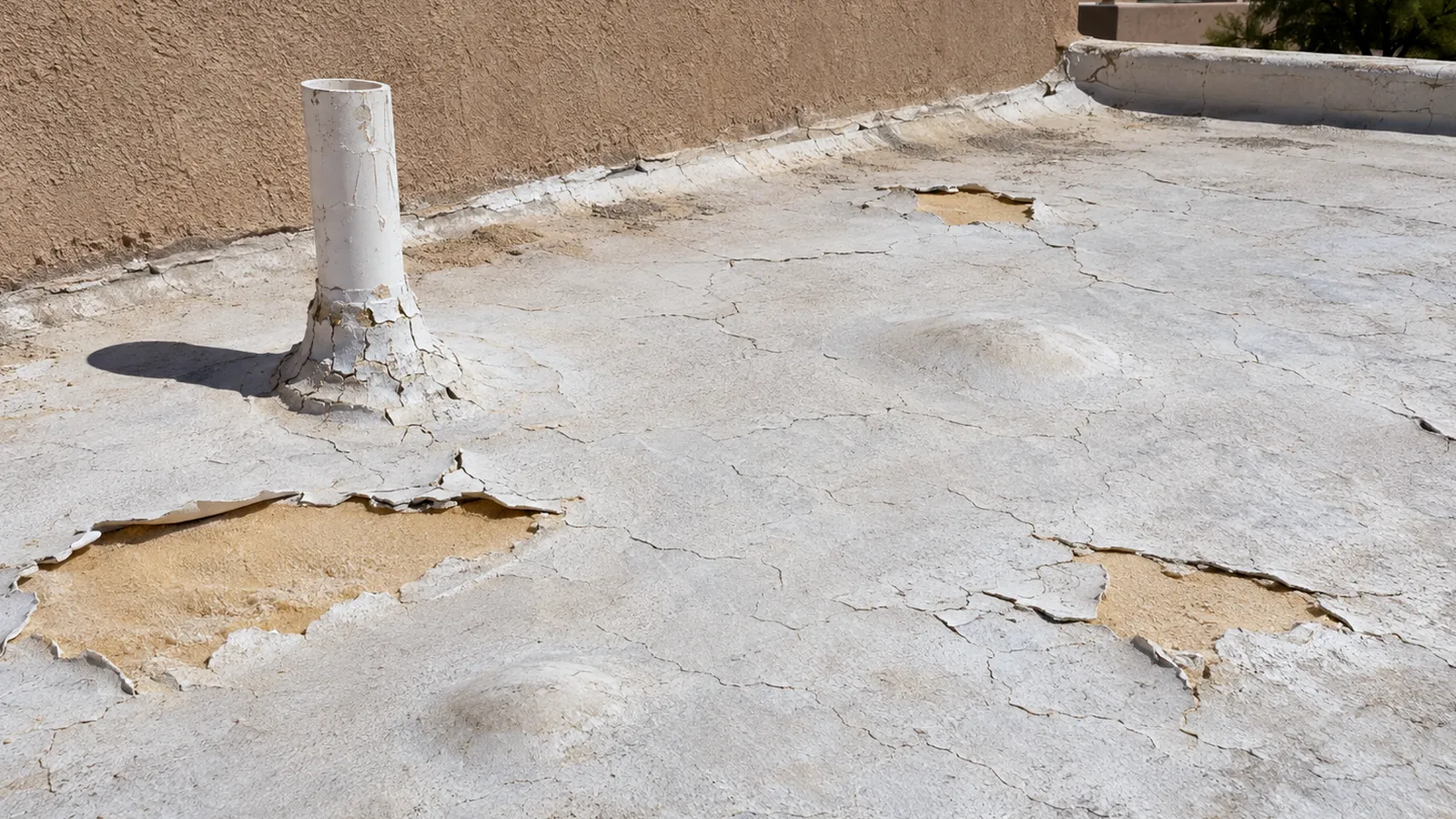
Original roofs on these homes were often built-up roofing with gravel, or rolled roofing on shallow pitches. Over the decades, many were covered with newer rolled roofing, modified bitumen, foam or coatings. It's common to find two or more layers.
Common problems
- Open seams and laps in rolled roofing
- Blisters from trapped moisture
- Low spots where water sits
- Edges and flashings pulling away
- Ice dams at shallow eaves
Your options
| Option | When it fits |
|---|---|
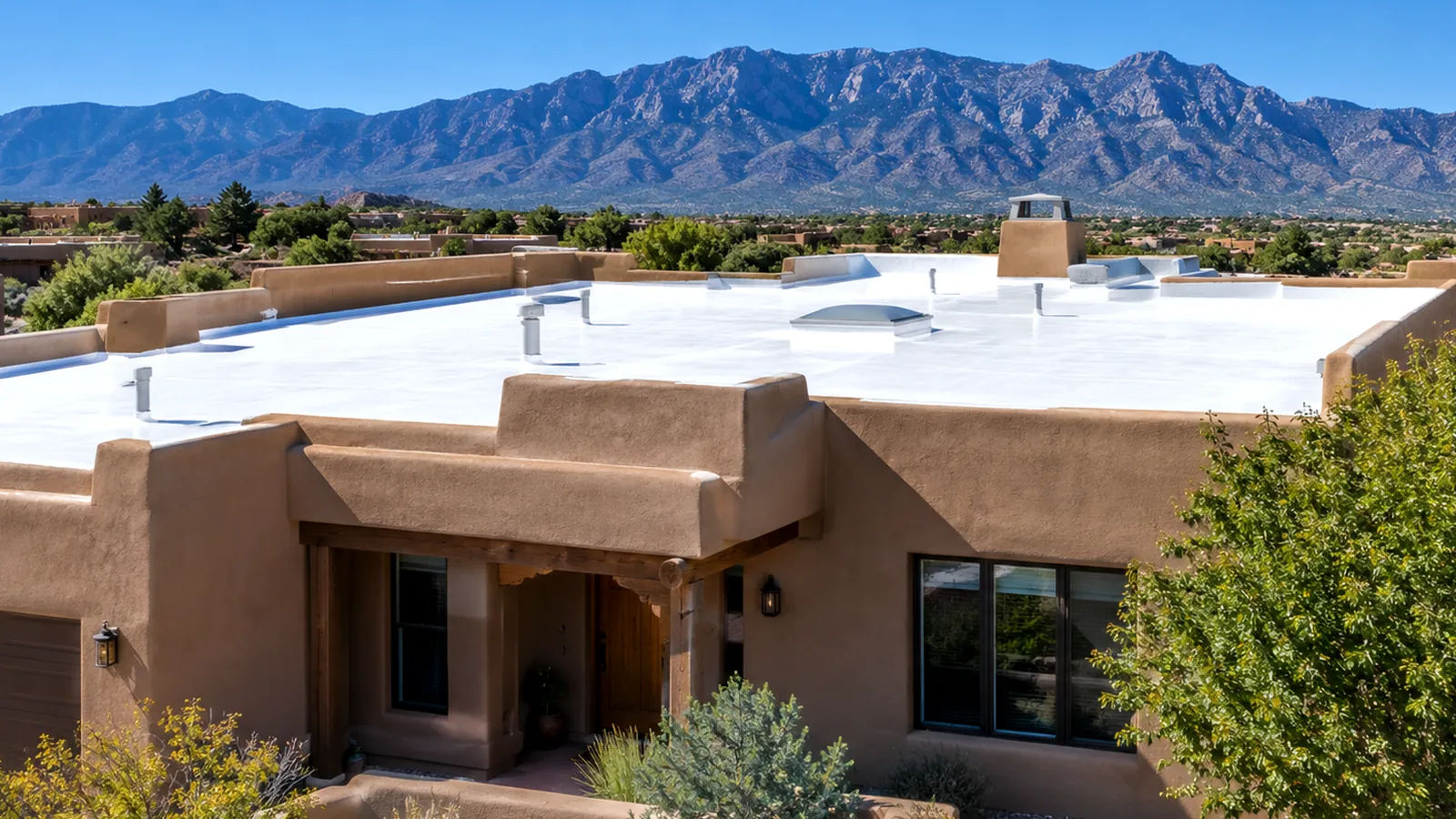
| Coating restoration | Roof is dry and mostly sound |
| Foam over existing roof | Dry roof that needs slope and insulation |
| Tear-off and TPO | Wet, layered or worn out |
Layer limits
Building codes limit how many roof layers can be stacked. If you're at the limit, tear-off is required before a new roof — but a coating can sometimes still go on an existing roof.
See low-slope roof coating and flat roof replacement.
Call (505) 257-2289 for an inspection.
Common questions
Is my roof original?
Probably not, after 70+ years, but there may be original layers underneath.
Can I add insulation to a flat roof?
Yes — foam adds insulation on top, and a TPO replacement can include insulation board.